
Pagosa Springs, CO: Discover ‘Mother Spring’ and why you should Visit Her Soon!
Pagosa Springs, Colorado
Pagosa Springs is the county seat, the most populous community, and the only incorporated municipality in Archuleta County, Colorado.


June 2023 / updated July 2025: We have visited Pagosa Springs multiple times over the last few years, and across several seasons. Drawn by the hot springs, we have enjoyed exploring all aspects of this vibrant town! Keep reading to learn about the wide variety of experiences available – and how to visit ‘Mother Spring’!
- 2023 Population: 1,718
- 2023 median age: 34.5
- 2023 median household income: $36,712
- 2023 median property value: $353,800
source: Pagosa Springs, CO | Data USA
Pagosa Springs – A Brief History
This small mountain town has a rich history deeply intertwined with its natural hot springs, which have shaped its culture and economy for centuries.
Early History and Native American Heritage
The area’s history begins with the indigenous peoples who first discovered and revered the hot springs. The name “Pagosa” is derived from the Ute word “Pagosah,” which means “healing or boiling waters.”
The Southern Ute Indian Tribe, the original inhabitants of the region, considered the springs sacred and believed they possessed healing and curative powers.
The Arrival of Europeans and the Rise of Tourism
In the 1860s, U.S. Army physicians studied the springs and confirmed their medicinal effects, spreading news of their therapeutic benefits. This led to an influx of non-native settlers seeking health and fortune. The federal government officially claimed ownership of the hot springs in 1880, leading to the settlement of the town, incorporated in 1891.
The Evolving Culture of Hot Springs Tourism
Hot springs tourism in Pagosa Springs has evolved over time:
- Early Days: In the late 1800s and early 1900s, the springs were a social hub. Locals and visitors alike would gather on Sunday afternoons for music, picnics, and bathing. People would dig their own small pools or build simple bathhouses, reflecting a more rustic and communal approach to the springs.
- Decline and Revival: With advances in modern medicine and the end of rail service in 1936, the popularity of soaking in hot springs for health reasons waned. However, the advent of automobile tourism in the 1950s led to a new wave of visitors, and new motels were built to accommodate them.
- The “Hippy Dip” and an “Underground” Culture: In the 1960s and 70s, a different culture emerged around the springs, particularly at the “Hippy Dip,” a free, unofficial soaking spot. This was a more counter-cultural movement, attracting “hot springs purists” who sought out free or donation-supported springs and formed an “underground” network of like-minded individuals. This era was characterized by a more casual, social, and even rowdy atmosphere.
- Modern Day: Today, Pagosa Springs’ hot springs tourism is more formalized, with several resorts and spas offering a variety of experiences, from luxurious soaks at The Springs Resort & Spa to more rustic, traditional settings. The town has also leveraged its geothermal resources for practical purposes, with a geothermal heating system that warms local buildings.

Beyond the hot springs, Pagosa Springs’ culture and economy today is also shaped by its location in the San Juan Mountains and its proximity to the San Juan National Forest. It is a hub for outdoor recreation, including skiing, hiking, and rafting.
Learn more

The primary historical museum in Pagosa Springs is the Pagosa Springs History Museum, formerly known as the San Juan Historical Museum. The museum was established in 1970 by the San Juan Historical Society to preserve and showcase the town’s past. The building itself has a history, as it’s the former town waterworks building. This location, right by the river, is central to the history of the town’s development

Small Town Vibe
Our 8 Favorite Experiences in Pagosa Springs!
We first visited the area for the hot springs – and now keep coming back for more!
#1. Soak in a Hot Spring! Options range from free to exclusive
Pagosa Springs is famous for its hot springs, which are all fed by the “Mother Spring,” the world’s deepest geothermal hot spring. While there are several options, the three main commercial hot springs offer different experiences to suit various preferences.

- The Springs Resort & Spa – The largest and most well-known of the resorts. Complete with over 50 different pools and cold plunges to choose from, this full-service resort includes lodging, food and beverage service, a spa and views of the surrounding mountains. Day passes are available. We spent a day here a few years ago – very fun and comprehensive experience! And a little spendy.
- Bathhouse (Hot Springs) @ The Springs Resort & Spa – Google Maps – location of Resort
- Worlds Deepest Geothermal Spring – Google Maps – location of Mother Spring!


- Overlook Hot Springs Spa – Victorian style & comfort at Overlook Hot Springs. Featuring rooftop tubs with views of the San Juan River through Pagosa Springs and the San Juan Mountains to the East. We spent a couple of hours here during a visit in 2023 – fun and unique! and less expensive than the resort options.
- Overlook Hot Springs – Google Maps – located in historic downtown
- Healing Waters Resort & Spa – Soaking options include a large outdoor swimming pool, an outdoor hot tub and separate men’s and women’s indoor hot baths. We haven’t visited this spa, but day pass prices look reasonable, so it is on our list to visit soon!
- Nathan’s Hippy Dip Hot Spring – least expensive… Free! Accessible from the River Walk. See photos and more details below
#2. Walk and explore the wide variety of sights along the San Juan River Walkway


We found one of the many entry points of the River Walkway and thoroughly enjoyed the many sights along the way! It runs the length of the San Juan River through Pagosa Springs and offers access to a wide variety of activities. We accessed Yamaguchi Park, the riverside free hot springs, a park with an arts fair, and lots of public art and natural views along the way. We highly recommend this walk to discover the vibe of Pagosa Springs (and let’s face it, to get a little much-needed exercise!)
#3. Visit the Yamaguchi Park to experience a variety of activities


From the River Walkway, we ended up in the Yamaguchi Park on the south end of town. The park itself is a multi-acre space along the San Juan River, offering a variety of amenities including paved trails, ball fields, Bocci Ball and Pickle Ball courts, a skate park, playground equipment, outdoor exercise equipment, a bandstand and access to the river. Impressive!

History Trivia: The park is named in honor of the Yamaguchi family, specifically four brothers—Ernest, Fred, George, and Ralph—who were all U.S. military veterans. After the war, the Yamaguchi brothers returned to Pagosa Springs and became integral members of the community. Notably, Ralph “Hoppo” Yamaguchi served as the mayor of Pagosa Springs, becoming the first Japanese-American mayor elected in the United States.
#4. Hippy Dippy (free!) Hot Springs


Returning to the town center on the River Walkway, we encountered the Hippy Dippy Hot Springs, a free set of bathing spots from the Mother Source herself! As we sat on the side of the pools, we watched people on innertubes casually floating by! The Hot Spring Resorts are in view. What a cool community (and visitor!) amenity to have a public beach and hot springs access in this River Walkway!

#5. Lots of murals and public art for fun photo ops


As we continued through town on the River Walkway, we also enjoyed a variety of murals and walkway art.


There are many murals and statues in historic downtown as well. Our favorite was the cat scream 🙂 (See The Scream painting by Edward Munch)
#6. Fun vibe food experiences
There are many popular restaurants in Pagosa Springs. Here is a shout-out to a couple of them:


- Riff Raff Brewing Company – Google Maps – we enjoyed good food and beer right on the side of the river! This places is accessible from the River Walk, with cool views of lakes and wildlife along the way.


- Kip’s Grill – Google Maps – good food, reasonable prices and fun vibe both indoors and outside seating
#7. Fun Cocktail Bar and Coffee Shop


We started our day with a cup of coffee at the Root House Coffee shop, conveniently located at one of the entrances to the River Walk.


Mid-day, after exploring the River Walk and heading downtown, we found a super cute place called Hidden Track. It is a vinyl listening bar and music venue – very cool! Tip: We lucked into Happy hour with half-priced signature cocktails on Wednesday and Sunday 4-7pm
- Hidden Track – Google Maps – located in a private basement in downtown Pagosa Springs.
- Welcome to Hidden Track | Speakeasy, Vinyl Bar | Pagosa Springs – official webpage
#8. Pagosa Spring’s historic downtown businesses and nearby local parks all support a fun and active vibe!
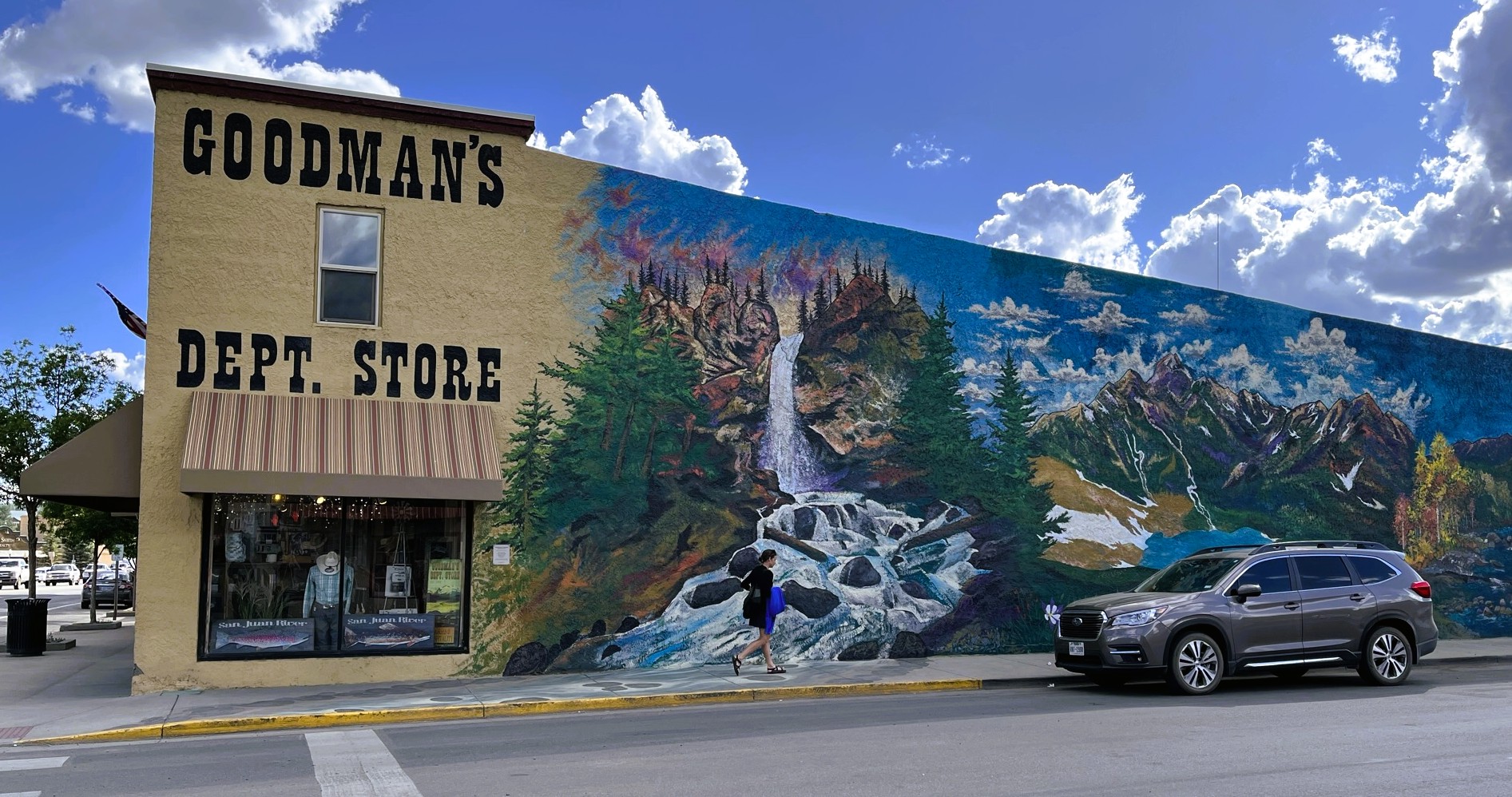

There are all kinds of fun shops, Galleries, restaurants, and even a Victorian house with hot springs soaking tubs in downtown Pagosa Springs! If you get tired of shopping, check out the Tennyson Sculpture Garden and Park close by on Lewis Street.
- Pagosa Springs Town Park – Google Maps
- Tennyson Sculpture Garden & Park – Google Maps
- Centennial Park – Google Maps


Hwy 160 runs right through downtown, which does impact walkability. During our July 2025 visit, there was a big road improvement project that further hampered one’s ability to walk comfortably, at least temporarily. The city has flags at intersections to help bring awareness and safety to people crossing the street.
We were pleased to have free parking on one end of downtown, with a nice paved sidewalk to easily get us where we wanted to spend our day!
small Town Vibe
Pagosa Springs Placemaking: Interesting Projects!
Placemaking is a people-centered approach to planning, designing and managing public spaces to create vibrant, healthy and economically viable communities.
With help from Gemini (Google AI), we learned more about some of our favorite finds in town.

#1. What is the San Juan Riverwalk and how does it serve residents?
A popular, paved trail that runs along the banks of the San Juan River through the heart of downtown Pagosa Springs, the San Juan Riverwalk is a central feature of the town, connecting various parks, businesses, and attractions. Its Features and high lights include:
- Access to the River for activities like fishing, tubing, and kayaking. A favorite component is the town’s whitewater park
- Connection to Parks, linking several of the town’s most popular parks, including Town Park, Centennial Park and Yamaguchi Park. This creates a continuous recreational corridor.
- Proximity to Hot Springs, offering access to The springs Resort & SPa as well as the feree unofficial “Hippie Dip” pools.
- Access to the Geothermal Greenhouse Project, a non-profit organization that uses the geothermal heat from the hot springs to grow plants in a community garden and geodesic domes.
- Wildlife Viewing. Due to the geothermally-heated wetlands area along the river, it does not freeze in the winter and is therefore a great place for nature lovers and birdwatchers.


#2. What is the San Juan River Restoration Project and what is its core purpose?
The Riverwalk project’s origins trace back to the San Juan River Restoration Project in the 1990s. This initiative, was designed to restore and improve the river’s ecological health and recreational value.
How does a small town community fund such an expansive project? Funding partners have included:
- Grants and Public Funds – such as the Colorado Water Conservation Board and the Colorado Division of Wildlife’s “Fishing is Fun” Program.
- Local Government and Partnerships – such as the Town of Pagosa Springs and Archuleta County, both providing matching funds, land and in-kind services for planning and construction.
- Non-profit and Private Organizations – including the Upper San Juan Watershed En hancement Partnership and the Great Outdoors Fund.
- Community Support – a creative example is the “adopt a rock” program, led by the Archuleta County Economic Development Association which allowed citizens to “purchase” a rock (i.e. donate) with their names engraved on a plaque.
Learn more about the Yamaguchi Suth River Improvement Project Construction, scheduled to begin in Fall 2025: Yamaguchi South River Improvement Project Construction | MyPagosa
#3. What is the San Juan River Quality Fishing Project and what are its goals?
This community-driven initiative is aimed at enhancing the fishing experience in the downtown section of the San Juan River. The project is a collaborative effort between local merchants, government, and community organizations. Its primary goal is to maintain a high-quality trout fishery right in the heart of town.
Aspects if the project include:
- Stocking “Trophy-Sized” Trout
- Encouraging Catch and Release
- Promoting Responsible Angling
- Providing Public Access


Geographical Trivia: It’s important to note that this is distinct from the “Quality Waters” section of the San Juan River located downstream in New Mexico, which is a world-renowned, year-round fishery with its own set of rules and a focus on wild, not stocked, trout. The Pagosa Springs project is a local initiative focused on the urban stretch of the river to provide a fun and accessible fishing opportunity for everyone.
#4. What is the mission of Geothermal Greenhouse partnership and how is it funded?
The GGP’s mission is to educate the community in sustainable agricultural practices by producing food year-round using local renewable energy. This mission is put into practice through a few key initiatives at their site along the San Juan Riverwalk, which features a collection of geodesic dome greenhouses:
- Year-round food production, using geothermal heating
- Education, offering programs for people of all ages ton topics like passive solar design, geothermal heating, water conservation and sustainable gardening.
- Community Engagement, providing space for a community garden and providing a central hub for community events.
- Demonstration of technology, demonstrating how geothermal energy can be used for direct-use applications, showcasing a practical and environmentally friendly use of a local renewable resource.


Funding sources include:
- Public Grants, including grants from the Colorado Water Conservation Board and the Colorado Garden Foundation, which helped build the greenhouses.
- Private and Corporate Donations, including local businesses, foundations and individual donors.
- Earned Revenue, in the form of produce sales, educational programs, classes, workshops and tours, as well as fundraising, such as their popular Environmental Film Festivals.
- Volunteerism, also plays a significant role in keeping the project cost-effective to construct and operate.
#5. What is going on with the Main Street Construction? What other placemaking improvement Projects are underway?
Pagosa Springs city government hosts a ‘Welcome to MyPagosa‘ webpage with a variety of featured projects underway. Great community visibility!
Main Street Construction
- The Colorado Department of Transportation (CDOT) is reconstructing our downtown main street resulting in substantial needed road, sidewalk, underground infrastructure, and storm drainage improvements.
- The Town of Pagosa Springs is also incorporating many substantial improvements in conjunction with the CDOT project, including: new street lights, sanitary sewer repairs, geothermal line replacement, new fire hydrants, conduit for internet fiber, street trees, and numerous side street improvements (Source: Main Street Reconstruction Project | MyPagosa)
Plan your Visit!
Annual Events
- Summer: ComFest 2025 – annual concert seriesin Yamaguchi Park
- July: 4th of July Celebration and Fireworks
- December: Old Fashioned Christmas – Christmas themed displays, activities, live music, hot air balloon glow, food and drinks, Santa!
- And a whole lot more events – see a real-time listing on this webpage
Visitor Information Sources
- Pagosa Springs Area Visitor Center – Google Maps
- Official Visitor Information for Pagosa Springs, Colorado
- Includes information on how to download a Pagosa Springs Travel Planning App
- Includes a link to your free travel Planner
- Picasso & Vino – Paint and Sip options; reserve online